
I've spent years talking to migrants, entrepreneurs, and people rebuilding their lives from nothing. There's one pattern I keep seeing in the ones who actually make it work, and it's not the one most people expect.
Most people treat hardship as something to survive and put behind them. I don't think that's the useful way to hold it. The people I respect most treat hardship as raw material, something you can actually build a mindset out of, then a method, then eventually something you teach other people.
Real Limits, Faced Early, Build a Mindset You Can Reuse
I believe facing hard limits early doesn't just get survived, it becomes proof you can handle whatever comes next. I've watched this play out again and again with guests on My Migrant Soul podcast: people who were told what they couldn't do, who had to take the long way around simple things other people never had to think twice about. The ones who come out stronger aren't the ones who had it easier. They're the ones who decided, at some point, that surviving the hard version means they can do anything.
That belief doesn't come from comfort. It comes from proof, the kind you only get by going through something and finding out you were capable of more than you thought.
Design for Correction, Not Perfection
A method built to be corrected will always outlast one built to be right the first time. This is something I try to live by in my own businesses, everything I've built. You don't get it right at the start. You build something, you let it be wrong in places, and you fix it as you go. The fixing isn't the failure part. It's the part that actually gets you to something good.
I think a lot of people avoid starting because they're waiting to have the perfect version worked out in their head first. That version never arrives. The people who move forward are the ones who accept that the sharpening, the painful, uncomfortable correction, is what produces the clarity, not something standing in its way.
Ask Before You Assume the Solution Transfers
What works for one group of people rarely transfers cleanly to another, even when the underlying goal looks identical. I see this constantly in migrant communities, someone builds something that worked back home, brings it to a new country, and assumes it'll land the same way. It usually doesn't. The people, the culture, the actual gap they're facing can be the exact opposite of what you expected.
The fix isn't complicated, but it takes humility: check before you assume. Ask the people you're trying to help what they actually need, instead of building from what worked for you somewhere else.
Give People the Language, Not Just the Advice
A lot of conflict isn't a lack of love. It's a lack of words to say what's actually going on. This shows up everywhere: between parents and kids, between people from different generations trying to understand each other, between anyone who cares about someone but has never had the vocabulary to say the real thing. Giving someone advice doesn't fix that. Giving them the language to actually say what they mean does.
I think this is one of the most underrated parts of any real change: not telling people what to do differently, but giving them the words they never had to describe what's actually happening.
I didn't come to this framework on my own. I had this exact conversation, in far more depth than I can fit here, with Tatiana Cross, a Business and Culture strategist who represented South Africa in the Fortune 500 Most Powerful Women's Global Mentoring Program, founder of Red Pencil Consulting, and founder of The Mother-Daughter Collective. Her own story, growing up under apartheid, building a business named after a pencil because a pencil can be corrected, and now working to break generational cycles between mothers and daughters, is where every one of these ideas actually comes from.
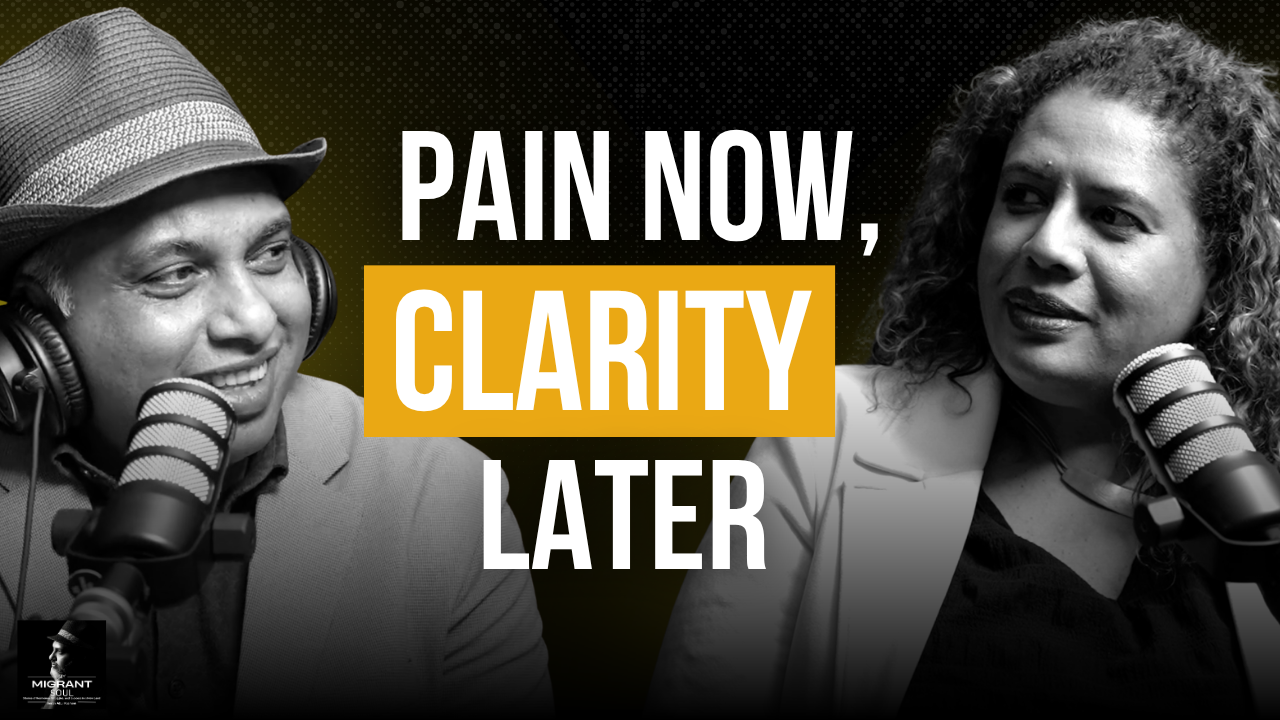





About Tatiana Cross
Tatiana Cross, a mother of two children, is the founder of The Mother–Daughter Collective, a body of work dedicated to changing the way mothers and daughters understand themselves, one another and the relationship they share. Tatiana is also a Business and Culture strategist, known for guiding organisations to build strong, diverse, and purpose-driven cultures, bridging strategy and human insight to help companies grow with clarity, integrity, and lasting impact.
Tatiana has been recognised globally for her leadership work, representing South Africa in the Fortune 500 Most Powerful Women's Global Mentoring Program, and is an alumna of Vital Voices. She was part of the team that helped lead the Generation Change Program, bringing together emerging leaders from across cultures and countries to address global challenges.
She is the Co-Founder and Director of EVE, a not-for-profit dedicated to empowering young girls in South Africa. Her work sits at the intersection of corporate leadership, women's empowerment, and lived experience, making a lasting difference in how organisations operate and how women lead, live, and influence the cultures they are part of.
About Imran Abul Kashem
Imran Abul Kashem is the founder of Westend Business Hub, Westend Photography, Westend Digital, Westend Podcast, and Wyndham Entrepreneur Connect. An award-winning photographer and serial entrepreneur, Imran brings ideas to life at the intersection of creativity and business. As an author, investor, business advocate, and cultural ambassador, he is passionate about building platforms that empower communities and spark meaningful conversations.
If this resonated with you, share it with someone who needs the reminder: you don't actually know what someone needs until you ask them.