
Practical advice for the first years of your migrant journey, when everything still feels unfamiliar.
In your first years in a new country, the natural instinct is to play it safe. You stay close to people who speak your language, keep your head down to avoid mistakes, and wait until you feel ready before you step out. Every migrant has felt that instinct. I believe it is also what slows most of us down. Comfort keeps you where you are, and settling in only really starts when you step outside it. These four lessons show how.
1. Enjoy It, and Don't Take Things Too Hard
The early months are full of small misunderstandings. The slang is new, the rules are different and the humour can be blunt. In Australia, "tea" can mean dinner, and "bring a plate" means bring food to share, not crockery. Teasing is often a sign that someone has accepted you, and a sharp comment may be friendlier than it sounds. If you read every one of these moments as an attack, settling in becomes exhausting. If you can laugh at them, they become the stories you tell later.
Everyone makes mistakes in the first year, so laugh at yours, and when you aren't sure what someone meant, ask. Most people are happy to explain. Real disrespect and racism are different, and they deserve to be called out calmly and clearly. The point is to give everyday moments the benefit of the doubt, so your energy goes into building your new life.
2. Lean on Your Community, Then Step Beyond It
Your own community is often your first support in a new country. It gives you familiar food, your own language and advice from people who have faced the same migrant struggles. That support matters. When it becomes the only place you spend time, though, your world stays small. Your English improves more slowly, your network stays narrow, and you miss opportunities you would never hear about.
In my experience as an entrepreneur, the bigger the challenge you take on, the bigger the reward. If you stay in your comfort zone, you don't go anywhere. Keep your community close, and add one group outside it, such as a sports club, a volunteer group or a local business network. Explore the suburb you live in, and get to know the other cultures around you: their food, their festivals and their stories. The invitations that feel slightly uncomfortable are usually the ones that open doors.
3. Trust Yourself, and Learn From the People Around You
Feeling out of place is normal for a new migrant. You may not know how things work, where you are heading or what to do next, and waiting until you feel certain can mean waiting for years. Many of us arrive with a degree. Some go on to use it here, and others end up on a completely different career path. Either way, the skills and judgement you brought with you still count, even when the system doesn't recognise them straight away.
If your overseas qualification isn't recognised, treat the local course as a step forward rather than a judgement on your ability. Then fill the gaps by learning from people who already know how things work here. Colleagues, neighbours and migrants who arrived before you can explain everything from job applications to local rules, and one person who has been here longer can save you years of guessing.
4. Walk With Your Head Up
Confidence is visible. When you walk with your head down, people read it as a wish to be left alone, and they leave you alone. A simple greeting changes that. Greet your neighbours, your colleagues and the people you see each week, even if you're nervous about your accent. A few won't respond, but most will greet you back, and many of the relationships that help you settle start with a hello.
The same applies to work and business. I have organised more than 70 networking events, and I see the same mistake again and again: someone starts selling within three sentences of meeting you. The people who do well introduce themselves, start a real conversation and let trust build first. The business card can come later.
This topic was discussed in Episode 16 of My Migrant Soul with Mark Muller, Director of Wired4Cloud. Mark grew up in Cape Town under apartheid and came to Melbourne in 1985. When I asked him what advice he would give new migrants, he shared these four lessons.
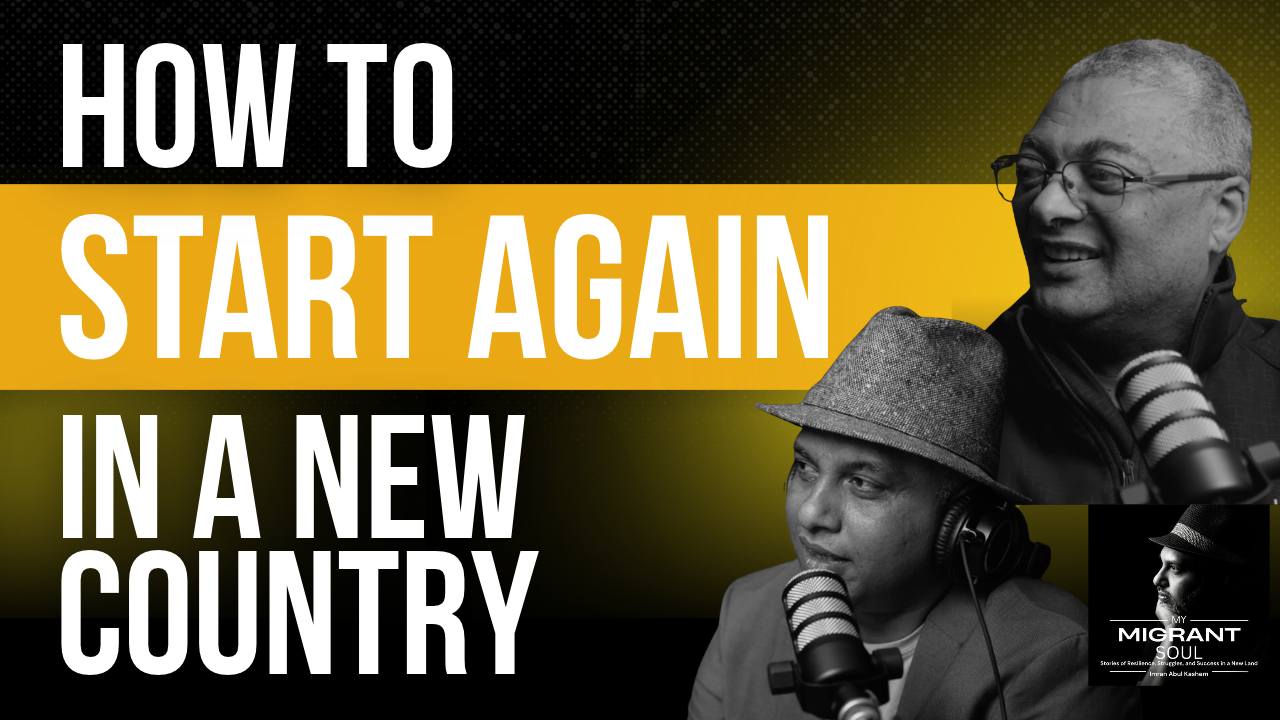





On enjoying the experience, he said: "I think the best thing is to enjoy yourself, number one. Don't take things too hard." He knows it wasn't always easy. Mark faced racism in Australia in the 1980s and 90s, and he says he brushed it off "because I came from a country that was worse than this." He also remembers the lighter moments, like his aunt turning up to a barbecue with extra plates instead of food to share.
On community, his advice was to "get yourself around people from your same country, to a certain extent, but also move out of your comfort zone," because "your comfort zone is not gonna get you anywhere." He lived it himself. For years he coached junior soccer at a club full of migrant kids, driving down from Broadford twice a week after work for training.
On trust, he said: "Trust yourself and trust the people around you as well." When Mark arrived, his electronic engineering degree wasn't recognised in Australia, so he went back to Holmesglen for a local certificate. He finished it so quickly that the college couldn't understand why, and he went on to build a long career in IT and cyber security.
On confidence, his advice was: "Don't walk with your head down, walk with your head up and greet people… and they'll greet you back. Don't be afraid." He applies the same idea to networking. He no longer carries business cards, and when people ask what he does, he tells them he's an ethical hacker who steals from the rich and gives to the poor. The conversation starts there, and the cards come out later, once there's trust.
Listen to the full episode to hear Mark's story in his own words.
If this resonated with you, share it with someone who needs the reminder: settling in starts the day you step outside your comfort zone.
About Mark Muller
Mark Muller began his career as a cash register technician, repairing systems for Safeway, Red Rooster, Hungry Jacks and other fast-food chains. He later moved into computer hardware at BCA, where he trained in Apple, IBM, Compaq, Toshiba and HP systems, alongside printer repair.
After qualifying as a TAFE-trained engineer, Mark earned industry certifications with Microsoft, Novell and Cisco. He opened his own computer shop before moving into senior engineering, technical support and project management roles.
His professional experience includes Microsoft specialist positions, hospital data projects, work with Channel 10 and Village Roadshow, and network engineering across complex environments. Mark ultimately became a Senior Network Engineer and Cisco-certified professional, combining practical troubleshooting skills with broad systems knowledge. His career reflects a steady progression from hands-on repairs to leadership, infrastructure planning and the delivery of reliable technology solutions for organisations and their teams for clients, communities and the people they serve.
About Imran Abul Kashem
Imran Abul Kashem is the founder of Westend Business Hub, Westend Photography, Westend Digital, Westend Podcast, and Wyndham Entrepreneur Connect. An award-winning photographer and serial entrepreneur, Imran brings ideas to life at the intersection of creativity and business. As an author, investor, business advocate, and cultural ambassador, he is passionate about building platforms that empower communities and spark meaningful conversations.