
Walter Villagonzalo's Fight to Belong





A Revolution, a Visa, and a Fresh Start
Walter Villagonzalo left the Philippines in 1986 as a naval officer caught in the middle of a revolution. He wasn't aligned with either side of the political upheaval, but that neutrality cost him his position anyway — three more senior officers took over his role, and the path back into the Navy looked bleak. With the country in chaos and a family to think about, Walter turned to his wife and said, simply, let's go to Australia. They already had a skilled migrant visa from two years earlier, and family was waiting in South Australia.
What started as a plan to "take a break" turned permanent within months. Walter applied for jobs across several cities and landed a senior systems analyst role in Melbourne, complete with a relocation package. His mother and brother came with him. The family eventually settled on a house in Hoppers Crossing after a single afternoon — they toured a local school, spotted a for-sale sign across the street, and signed the paperwork an hour later. On paper, it looked like a fast, successful transition. What Walter didn't expect was how long it would take to actually feel like he belonged.
Twelve Years Without Belonging
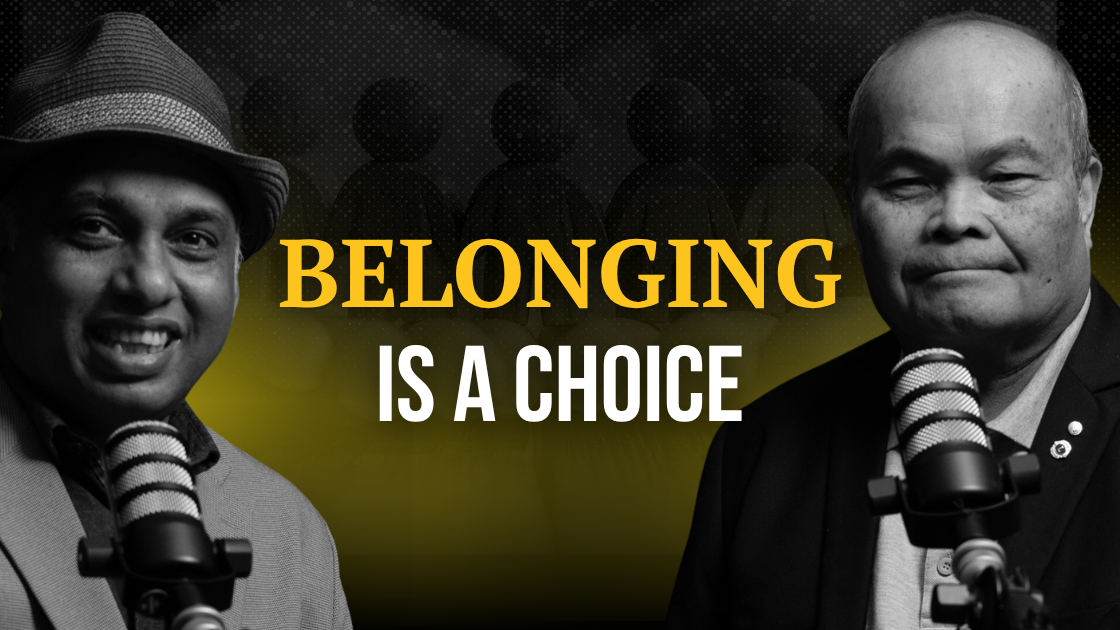
In this episode of My Migrant Soul, Walter tells host Imran Abul Kashem about the twelve years he spent working, volunteering, and building a life in Melbourne's west while still feeling like an outsider. He was active in the community, president of the Filipino Club of Werribee, involved in local business groups — and still, something didn't sit right. As he puts it, migrants arrive used to their own country, and then land somewhere new feeling like second-class citizens, like whatever they accomplished back home simply doesn't count anymore. You start from the bottom, no matter what you already built.
Twelve years in, that feeling reached a breaking point. Walter brought his family back to the Philippines, intending to stay for good — he told his kids, by then teenagers, that this was where he belonged. Instead of agreeing, they cried. "But Dad," they said, "we are Australians." It was a moment Walter hadn't planned for: the country he'd left had, without him fully realizing it, become home for his children in a way it hadn't yet become home for him. After prayer and long conversations with his wife, the family made the decision to go back to Australia — not for Walter's sense of belonging, but for his kids'. That exchange sent him back with a different question entirely: not how to return home, but how to build one.
Building on Purpose
What followed his return was a decades-long run of community work — not casual involvement, but something closer to a full-time second career. Walter estimates he's held roughly 50 roles across community organizations and government committees over the years: from conveyancing groups to consumer committees to anything that needed someone to represent the migrant voice. He founded the Filipino Club of Werribee, then closed it to launch the Migrant Hub, a more explicitly multicultural organization built on a simple belief — that migrants need to be active in their own community first, but the real goal is being part of the wider one.
That philosophy showed up in how he solved problems, too. When Wyndham City Council rejected a funding request for a community worker and office space, Walter didn't wait for a different answer. He and a handful of other community leaders — from the Malaysian, Tongan, and broader migrant communities — pooled resources and opened a cafe, turning it into their unofficial headquarters. People came in for coffee and stayed for the festivals and events the group ran out of it. Local papers covered them 20 times in a single year. It wasn't the funding they'd asked for, but it built something that outlasted a single grant application.
Losing Four Elections, Then Winning
That same persistence carried him into local politics. Walter ran for Wyndham City Council five times before he was finally elected in 2016, going on to serve as Deputy Mayor from 2017 to 2018. He draws a clear distinction between the two paths open to him during those years: making noise as an activist, or getting into the room and becoming a reformist. He chose the latter, and it took five attempts and a Citizen of the Year title along the way to get there.
Once elected, the work didn't get easier — it just changed shape. At the time, Walter was one of only two councillors out of eleven from a migrant background, and English being his second language meant every council debate required an extra translation step in his own head before he could speak. His advocacy centered on two things the council wasn't prioritizing: funding for the migrant community, which made up 20 to 30% of the municipality at the time, and support for small businesses, which he felt were getting overshadowed by conversations about attracting big chains. He also ran twice for state parliament, and after one further council term, wasn't re-elected — a reminder that this kind of work rarely runs in a straight line.
What Belonging Really Means
Across the whole conversation, one idea keeps resurfacing: belonging isn't given to you when you arrive, it's built through what you're willing to contribute. Walter is careful to note that mainstream Australia doesn't actually treat migrants as second-class — it's a feeling migrants project onto the situation, not a reality imposed on them from outside. His answer to it was never to wait for that feeling to lift on its own, but to out-give it.
He also offers a reframe that's less about hustle and more about permission: he calls it leading from "the middle." At a recent diaspora summit, he described most migrants as neither outstanding nor problematic — just quietly present, comfortable, not doing much. It's easy to read that as a criticism, but Walter means it as an invitation. That middle space isn't small, he argues, it's where almost everyone actually is, which makes it exactly the right place to start leading from, instead of waiting to feel exceptional before contributing anything at all.
What's Next: Trees, Legacy, and Giving Back
At 73, Walter shows no signs of slowing down. He's currently leading a cooperative building community-owned tree nurseries across Australia, starting with one in Point Cook, in a region that has the lowest tree canopy coverage in greater Melbourne. The logic is practical as much as environmental: councils and companies chasing net-zero targets all need trees, and someone has to grow the seedlings. Walter's cooperative is partnering with the Lions Club toward a goal of a million trees planted nationwide, aiming for 2030.
It's a fitting next chapter for someone whose whole approach has been about achieving his own goals by helping other people reach theirs first. As he tells Imran, migrants of his generation don't really retire — they just keep working for the community, in whatever form that takes next.
What You’ll Hear in This Episode
Key Takeaway
"The more I did something for the community, the more I felt belonging, the more I felt like I'm not a second class citizen. I am first class, I am Australian." — Walter Villagonzalo
About the Host - Imran Abul Kashem
Imran Abul Kashem is the founder of Westend Business Hub, Westend Photography, Westend Digital, Westend Podcast, and Wyndham Entrepreneur Connect. An award-winning photographer and serial entrepreneur, Imran brings ideas to life at the intersection of creativity and business. As an author, investor, business advocate, and cultural ambassador, he is passionate about building platforms that empower communities and spark meaningful conversations.
About the Guest - Walter Villagonzalo
Walter Villagonzalo OAM moved to Australia from the Philippines in 1986, settling with his family in Hoppers Crossing in 1988 after a background in the military and computer technology. He went on to serve as a member, founder, or officer of more than 50 community organisations and government committees, and was elected Wyndham City Councillor from 2016 to 2020, serving as Deputy Mayor from 2017 to 2018. A social entrepreneur, Walter was named Australia's Social Enterprise Champion by Social Traders in 2016 and City of Wyndham Citizen of the Year in 2015. He is the Founder and President of The Migrant Hub Inc. and the Canopy Accelerator Co-operative Limited, Co-Founder and Past President of the Australian Council for Multicultural Entrepreneurs Inc., and Acting President of the Asian Business Association of Wyndham. In June 2025, Walter was named a recipient of the Order of Australia Medal.
If this story resonated with you, share it with someone who needs the reminder: belonging isn't given, it's built.